
Covid-19 is a pandemic situation that has made people’s lives go upside down. Since WHO declared it a pandemic, many countries have imposed lockdown to prevent their population contracting from this deadly virus. In the UK, lockdown started on March 23rd, 2020, in an unprecedented measure to contain the virus. See official guidance at GOV.UK coronavirus guidance.
The Impact of Lockdown on the UK Taxi Industry
Lockdown in the UK has immensely affected many entrepreneurs and businesses, and the taxi business is one of the many to be hit by the COVID-19 blowdown. Many taxi driver’s businesses in Princes Risborough has seen nearly vanish due to the Coronavirus outbreak. Taxi drivers drive for hours, but nothing pops out on barren roads of Princes Risboroug. Those drivers whose income is totally dependent upon taxis have gone completely bankrupt, and fewer jobs are being offered to them since the breakout of Coronavirus.

The Human Cost of the Pandemic
The pandemic’s impact is not just economic; it has a deeply personal and tragic side. The stories of drivers on the front lines bring the real-world consequences into sharp focus, reminding us of the human element behind the headlines. A Pakistani taxi driver has recently lost life to the novel Coronavirus in South London, and hence it has marked as the second taxi driver who has lost his life to the deadly virus within a week.
Zeeshan Ahmed, 27, passed away at St. George’s Hospital, leaving many grievers behind. His father, Muhammad Iqbal Gondal, has described his son to be a martyr. Zeeshan Ahmed had left two sons, both under the age of five.
Zeeshan Ahmed came to London with his family in 2014 and started his life here in Tooting Bec. He began to feel mild symptoms of Coronavirus on April 1st. Hence, he self-isolated himself before his condition became more critical and was taken to St. George’s Hospital on April 10th.
He struggled for his life on a ventilator for six days but unfortunately lost the battle of his life. There is still no clarity as to how he contracted the disease, Mohammad Iqbal Gondal said.
His father, Muhammad Iqbal Gondal, 60, also contracted the virus but showed very mild symptoms. His health condition didn’t get worse, and hence he started to recover after within ten days.
According to the statement of grieving, dad Zeeshan was the only child of me. I devoted my whole life to make his life better. He was the light of my eyes. I can’t even describe the pain I’m going through with. He is a martyr who lost his life against this deadly pandemic. My son is a shaheed, and I will remember him with these words forever. He was my whole world, and now he left us shattered. He was so passionate and wants to fulfil all his dreams.
Union of taxis based in London said in a statement: “Zeeshan Ahmed, a fellow London Uber driver passed away today in St George’s Hospital (Tooting) from Coronavirus. He had two very young kids. Our deepest condolences to the family.” Before Zeeshan Ahmed, another taxi driver, Ayub Akhter, 33, who was in perfect health, had also lost his life to the Coronavirus in the same Hospital. As described by the family, Ayub complained of getting the infection after the traveller consistently coughed on his taxi’s back seat.
The Urgent Need for Enhanced Safety Measures
London transport has extremely deteriorated after the breakout of Coronavirus. However, London still has not categorized taxi drivers as essential workers and hence has allowed them to earn their wages without any protective measures whatsoever. For official London transport updates, visit Transport for London (TfL).
Advocating for Driver Safety
The lack of official designation as ‘essential workers’ for taxi and private hire drivers during the early stages of the pandemic created significant safety gaps. This highlighted a critical need for transport authorities and taxi firms to take independent, decisive action. Without mandated protections, drivers were left vulnerable, forcing companies to innovate and implement their own safety protocols to safeguard their workforce and the public.
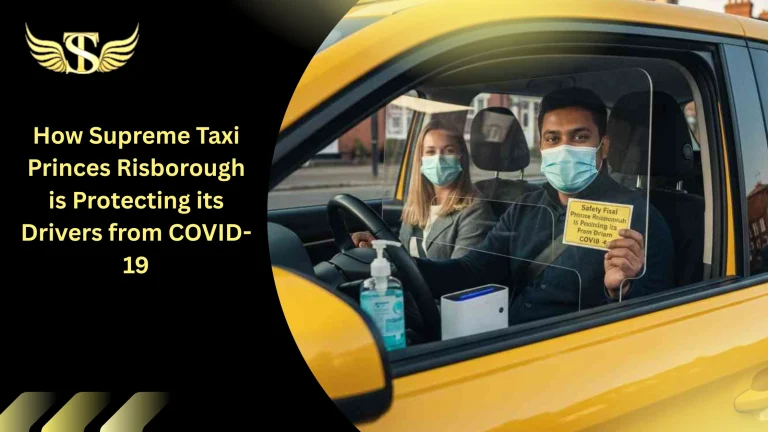
Supreme Taxis Princes Risborough has tried to resolve this issue. In consideration of the precious lives of taxi drivers , it has taken the initiative of adding a partition screen between the driver seat and the back seat. Hence, it might prevent the spread of the virus from passengers to drivers. There are screens readily available that are only waited for the affirmation of license authorities.
Comprehensive Safety Protocols
Beyond physical barriers, a multi-layered approach is essential for maximising protection. Effective driver and passenger safety relies on a combination of vehicle modifications, hygiene practices, and clear communication. Implementing a robust safety checklist ensures all critical areas are addressed.
Key protective measures include:
- Regular Vehicle Sanitisation: Frequent cleaning of high-touch surfaces like door handles, seat belts, and payment terminals with disinfectant wipes or sprays.
- Promoting Contactless Payments: Encouraging passengers to pay via card or app to minimise physical contact and cash handling.
- Ventilation: Keeping windows slightly open when possible to improve air circulation within the vehicle.
- Health Monitoring: Advising drivers to monitor for symptoms and stay home if they feel unwell, protecting themselves and their passengers.
Supporting Taxi Drivers’ Wellbeing During COVID-19
Supporting drivers is not just about physical safety—mental health is equally important. During the pandemic, many taxi drivers have experienced isolation, anxiety, and financial stress. Companies should:
Provide access to mental health resources and local counselling services.
- Create online or telephone support groups where drivers can share challenges and coping strategies.
- Offer guidance on financial help, such as information on government grants or hardship funds.
New Technologies Assisting Taxi Safety
Innovative digital solutions are playing a growing role in protecting its drivers from COVID-19:
Contact tracing apps can alert drivers if they’ve transported a passenger who later tests positive.
- Digital training modules offer rapid updates on latest guidance and best practices.
- In-car air purifiers and antimicrobial seat covers add another layer of defence, especially in high-density urban areas.
In late April, when aeroplanes brought many persons back home, our taxi service was on the front line, ferrying travellers from around the world to their destination. There was little time for drivers to take protective measures. Still, Princes Risborough Taxis has provided them with all the essential aids to prevent them from contracting viruses such as masks, hand sanitizers, and germ disinfectant spray as well. After their shift ends, all drivers are asked to disinfect their vehicles by using disinfectant spray so that any passenger who would take the ride would not contract any germ.
Building Trust with Passengers in Challenging Times
Restoring public confidence in shared transport requires transparency and a commitment to best practices. Many companies now display ‘COVID Secure’ certification, explain their hygiene measures on their websites, and encourage passenger feedback. Passengers, in turn, are reminded to wear face coverings, use sanitisers, and avoid travel when unwell to further reduce risk.
Supreme Taxi Princes Risborough is always proud of its endless services to their valuable customers. During a crisis, it outshines all the other taxi services in the region by introducing rigorous protective measures for both the drivers and the customers. Explore more on our services page or our Thame taxi hub.
Conclusion
Protecting taxi drivers from health risks like COVID-19 is a shared responsibility. While the pandemic has presented unprecedented challenges, it has also spurred innovation in safety. By combining physical barriers like screens with strict hygiene protocols and passenger cooperation, we can create a safer environment for everyone. The commitment of services like Supreme Taxis to go above and beyond in safeguarding their team and customers sets a standard for the entire industry.
Ready to help protect your driver and community? Share your safety tips, ask a question in the comments, or follow us for the latest updates. Stay safe and travel responsibly!
Frequently Asked Questions (FAQs)
1. What are the most effective in-car safety measures against COVID-19?
The most effective measures include installing a partition screen between the driver and passenger, ensuring good ventilation by keeping windows open, and regular sanitisation of high-touch surfaces. Providing hand sanitiser for both driver and passengers also significantly reduces risk.
2. Are taxi drivers considered essential workers in the UK?
During the initial COVID-19 outbreak, taxi and private hire drivers were not officially classified as ‘essential workers’ in the same category as NHS staff or supermarket employees. However, they provided essential transport services, which led to calls for greater protection and recognition of their role.
3. How can I ensure my taxi is safe before I get in?
Look for visible signs of cleanliness. You can also ask the driver about their company’s hygiene policy. Many companies that prioritise safety will display information about their cleaning protocols. Choosing services that promote contactless payment and have partition screens is also a good practice.
4. What should a passenger do to help protect the driver?
Passengers can help by wearing a face covering, using hand sanitiser before entering the vehicle, handling their own luggage, and paying via a contactless method. If you feel unwell, it is crucial to stay home and not travel to prevent potential spread.
5. How are taxi companies supporting their drivers during the pandemic?
Responsible taxi companies are providing PPE, implementing regular cleaning routines, offering mental health resources, and keeping their teams informed about the latest safety guidelines. Some have even set up financial support schemes for drivers affected by loss of earnings.