
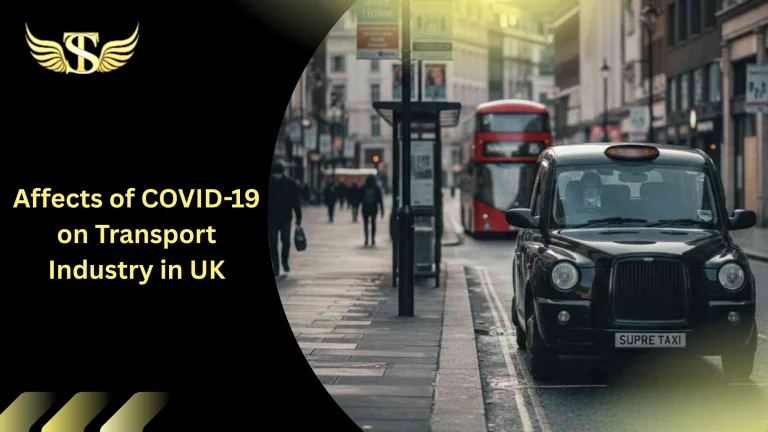
The Coronavirus pandemic has affected every part of life. However, it is health, economy, education, tourism, transport, or more. The virus harmed every part of the world. In the past few months, the whole world has also been to a complete stop with closing flights and even other transport facilities. The situation is now seeing to be towards betterment, but it is still not as usual and ordinary as it was used to be. Given below are some of the points and discussions about how has the COVID-19 affected the transport industry in the UK.
The Initial Shock: How the Pandemic Paralyzed Mobility
The first national lockdown in March 2020 brought unprecedented disruption to the UK’s transport network. With a ‘stay at home’ order in effect, passenger numbers across all modes of transport plummeted to historic lows. Transport for London reported a 95% drop in tube journeys, while National Rail saw a similar collapse in passenger numbers. The skies fell silent, with Heathrow Airport, one of the world’s busiest international hubs, experiencing a near-total halt in passenger flights. This sudden stop was not just a temporary inconvenience; it exposed the vulnerability of the entire transport ecosystem, from large public transit authorities to private hire and taxi firms, and forced a fundamental re-evaluation of what ‘essential travel’ truly means. The initial shockwave set the stage for a series of ongoing challenges that would reshape the industry.
Fear in Passengers
The first and foremost effect of COVID-19 on the transport industry is that it develops fear in the passengers. Since the significant way of the spread of the disease is through contact with an affected patient. Hence, people started to avoid traveling through local transport. Buses and trains were comparatively more affected due to this fear. Since they are more crowded with passengers, the risk of the disease’s spread is also higher in them. However, taxis were also affected, and people started traveling less through taxis like Princes Risborough taxi, Heathrow to Thame taxis, and taxis in other cities as well.
The Shift in Public Perception and Hygiene Standards
This pervasive fear led to a dramatic shift in public behaviour and expectations. Passengers were no longer just looking for a ride; they were seeking a safe, sanitised, and controlled environment. In response, the industry had to rapidly implement new hygiene protocols. For taxi and private hire services, this meant installing protective screens, making hand sanitiser available, and adopting rigorous vehicle cleaning routines between journeys. Public transport operators introduced enhanced cleaning regimes, focusing on high-touch surfaces like handrails and ticket machines. The concept of ‘social distancing’ became a key factor in capacity management, with signage on floors and seats to guide passengers. This focus on cleanliness and visible safety measures became, and remains, a critical component in rebuilding passenger confidence across the UK.

Closing of Workplaces
Taxi Princes Risborough was used by many people to travel to their workplaces. However, COVID-19 also led to the closing of many workplaces and educational institutions. Many people were also forced to quit their jobs due to this pandemic, and hence this proportionally affected the transport industry. Since now fewer people have to travel to their workplace and thus this even led to less usage of Princes Risborough taxis or taxis of other major cities. Therefore, the situation started to become worse for taxi drivers and companies as well.
The Rise of Remote Work and Its Lasting Legacy
The closure of offices catalysed one of the most significant societal shifts in modern times: the mass adoption of remote working. What was initially a temporary measure for many businesses has evolved into a permanent or hybrid model for a substantial portion of the UK workforce. This has had a direct and lasting impact on commuter patterns. The traditional ‘rush hour’ peak, a cornerstone of demand for transport services, has been permanently altered. While some commuters have returned, the volume is significantly lower than pre-pandemic levels. This has created a new challenge for transport providers who must now manage more spread-out, less predictable demand throughout the day, rather than the concentrated peaks they previously relied upon for revenue.
Financial Crisis
Another reason for the downfall of the transport industry in the UK is the financial crisis going all around the world. Many people have lost their jobs and are facing a financial crisis. This crisis has affected the routines of everyday life significantly. Many people have stopped traveling less and have restricted their lifestyles to be more conservative. Once Princes Risborough taxi was full of passengers who were traveling around the town and even out of the city. But, due to the financial crisis brought around by this pandemic, people have less money to move around, explore places and go shopping. Hence, transport services are less utilized due to the fewer number of passengers traveling. Buses and trains are much avoided due to being crowded, but taxis, although being safe, are being used less due to the financial crisis that most of the people are facing. For longer journeys, long distance taxis have also seen reduced demand.
Restrictions for Tourism
One of the essential ways in which the transport services are used is through tourism. When a tourist visits a country, they surely need to use taxis and other transport facilities to travel around, explore places, and visit tourist attractions. Hence, this makes a vital profit for the travel industry. But after the advent of COVID-19 tourism all around the world has been to a stop. Many countries have banned traveling from and to a nation, and hence in this way, there are no tourists that would use taxis. It has put an enormous burden on taxi companies since there are fewer people to use their services, and most of the time, taxis are roaming empty. Princes Risborough taxi, taxis to Luton Airport are used very little due to this crisis, and the taxi drivers are also worried due to this reason. For official guidance on transport and travel, visit National Rail.
The Gradual Return of Domestic and International Travel
As vaccination programmes rolled out across the UK and the world, the tourism and travel sectors began a fragile recovery. The initial phase was dominated by ‘staycations’ and domestic travel, providing a vital lifeline for local taxi firms and regional transport links. While international travel has resumed, it operates in a landscape transformed by complex and often changing travel rules, testing requirements, and passenger locator forms. This uncertainty continues to suppress demand for airport transfers, such as Thame to Heathrow taxis and services to Gatwick. The recovery of this segment is intrinsically linked to global public health and the simplification of international travel protocols, indicating a slower return to pre-pandemic normality for airport-related transport services.
Government Policies and Restrictions
Another reason through which the transport facilities are being affected is due to the government policies and restrictions. The government has closed many places and has also restricted people to travel for their safety and betterment. This policy is being followed worldwide in which people are instructed to move less and remain mostly in quarantine to reduce the spread of the disease. Governments around the world have suggested different levels of lockdown. Some governments have gone to a full lockdown while others have implemented a smart or partial lockdown. The places where there is a complete lockdown have put more significant stress on the transport industry than areas with the partial lockdown. Hence, the situation has proved to be worse for taxis like taxi Princes Risborough and taxis worldwide.
Financial Support Schemes and Future Investment
Recognising the existential threat to the transport sector, the UK government intervened with several support schemes. The Coronavirus Job Retention Scheme (furlough) was a crucial lifeline, allowing many transport operators to retain staff despite massively reduced revenues. Additionally, specific funding packages were provided to keep bus and train services running, even with minimal passengers, to ensure transport remained available for key workers. Looking ahead, the government’s focus has shifted towards a ‘green recovery’, promoting active travel like cycling and walking, and investing in sustainable transport infrastructure. This policy direction signals a long-term change, encouraging the industry to innovate and adapt towards a more environmentally friendly and resilient future.
Airport Taxis
Since international traveling has also stopped, so taxis from and to airports have also suffered from these situations, Thame to Heathrow taxis, Gatwick airport taxis, and taxi to Luton Airport are less utilized due to fewer passengers.
Supreme Taxis
Supreme Taxis Thame is one of the leading taxi services in the UK. But due to the crisis brought around by the COVID-19, Supreme Taxis have also faced some issues. Before this pandemic, there were about 40-50 rides in a week, but since everything was closed due to the coronavirus’s lockdown, there was a decrease in the number of rides that were carried out in a week. The figure had even fallen to one or two trips a week to none during the whole lockdown situation. However, now the case seems to get better as time progresses, and we are slowly back to our entire schedule and service. Our services, such as Princes Risborough taxi and airport taxis, are available to passengers.
The Road to Recovery and Adaptation
The UK transport industry is now navigating the long road to recovery. This is not simply a return to 2019, but an adaptation to a new normal. Key trends shaping this recovery include the continued importance of flexible and hybrid work models, a sustained focus on hygiene and safety, and a greater public awareness of transport options. Many providers are diversifying their services, offering pre-booked slots, contactless payments as standard, and dedicated vehicles for specific needs to cater to a more cautious clientele. The resilience and adaptability demonstrated by companies across the sector, from large networks to local firms like Supreme Taxis, will be the defining factor in their successful recovery and future growth.
Conclusion
The situation caused by the pandemic has affected every part of life and has created a significant financial crisis all around the world. Most people are avoiding traveling around, and this has affected the transport industry greatly. Taxis are empty due to fewer passengers, which has put financial stress on taxi companies and taxi drivers. However, the situation now seems to get resolved and getting better as the day passes. It is hoped that everything would be back to normal in a few months.
Has your business or daily commute been affected by the changes in the transport industry? We value your insights. Share your experiences or thoughts in the comments below, and if you found this analysis helpful, please consider sharing it on your social media channels to continue the conversation